


For those of you who have joined me since my last writing, welcome! It is so lovely to see you here. And I’m so excited to share Aliveness with you! I’m sorry it's taken a bit of time. This series has taken it OUT of me. But we are also nearing the end of it. If you would like to read the previous parts of this series, you can:
Read part one here.
Read part two here.
Read part three here.
And…
I’ve chosen not to publish Part 4.
Part 4 was the defense evaluation. They were legally entitled to the opportunity to unravel my experience, thread by thread. And every moment was like another trap designed to do so.
I said at the end of part 3 that the evaluation was a gift. It was.
Part 4 was not a gift. No, no, no, it was a retraumatization. It was a gaslight. It was all in service of saying: “You are no longer hurt. You were not hurt as bad as you say you are. Even if you think you are, it’s just in your head.”
Nothing prepares you for the ramifications of that pernicious narrative. The doubt that creeps in. The fear that settles into your gut that you really don’t know yourself.
Writing is how I have been integrating this. And a lot of yoga. I’m a yoga machine! Work. I’ve thrown myself into my work.
Throughout this series, I’ve made deliberate choices about which aspects of autonomy I take back during this process. Not publishing Part 4 is an exercise in taking back this power for myself.
Part 5 is the process.
The Invitation
A text arrives:
“Preliminary hearing scheduled for tomorrow via Zoom. Sorry for the last minute notice.”
My heart jumps. This is it. The process really begins.
For such a high-stakes event in my life, the Zoom link arrives in such a seemingly ordinary way: by email... the way a link arrives for anything: a dentist reminder, a work call, and apparently an arbitration over the last two years of my life. Same blue underline.
The Venue
My commute the next morning to the hearing is rather uneventful. No white-knuckled anxiety. I did have a coffee. No use disrupting my morning routine; I already feel disrupted.
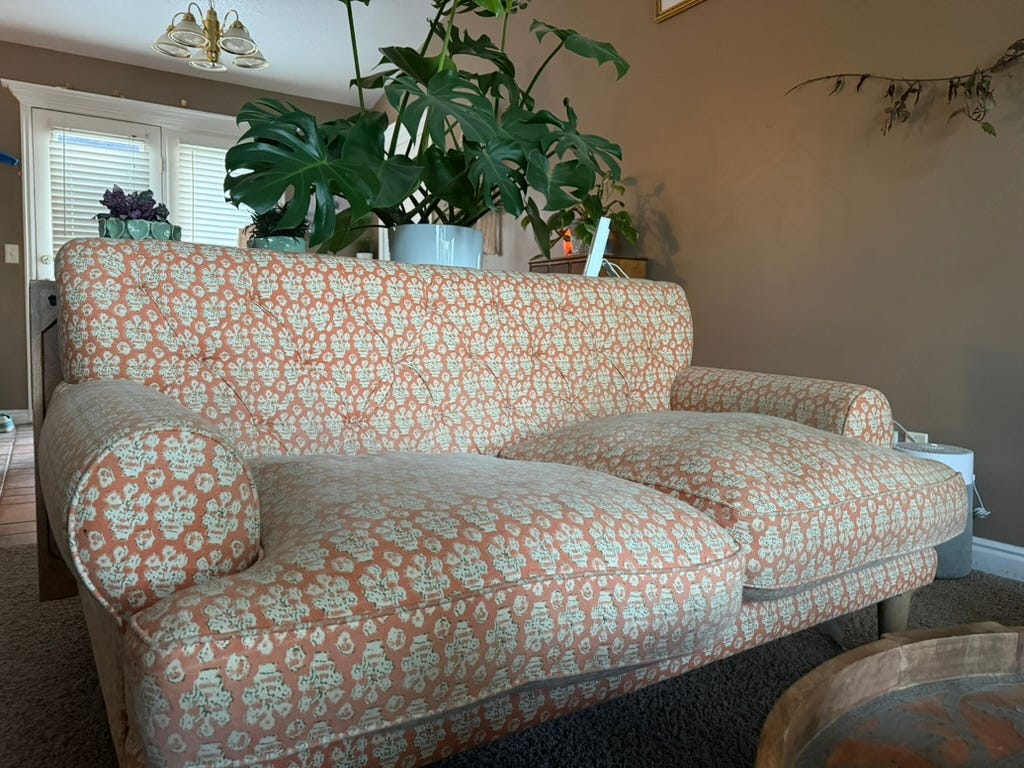
It also is downright odd! There is no courthouse, so there was no drive (so no coffee on the way), no parking, no hallway to sit in with the folder sitting anxiously on my knees. The proceeding that begins the process of deciding what the accident was worth will take place in my living room. On an orange floral sofa.
So I make the living room into a courtroom.
I move the laptop to the end of the table so the light doesn't come from behind me. I check, over and over again, what the camera sees, making minor adjustments along the way. Luis is going to wonder what happened to this room!
I put on a collared shirt and leave the shorts on, which everyone did during the pandemic. The pandemic mullet, I remember with a cold smile. I close the basement door and bedroom door. Helix watches with the expression he uses for events he wasn't consulted on, and Poppy takes the chair that is basically hers, and I decide the two of them can stay if they are quiet. One of them will have an opinion eventually.
At the scheduled time I click the link, and the living room stops being the living room. The screen goes to a waiting room, a rectangle with my own face in it and a line of text that says the host will let me in soon.
Court is now in session.
The Inconsistencies
The arbitrator lets me in, and the room is five rectangles. The arbitrator. My lawyer. The insurance company’s lawyer. A fourth person whose role is never explained to me. And then me.
The insurance company’s lawyer goes first, and he’s brought my own record to use against me.
The claimant’s statements are inconsistent, he says. In his earliest accounts, he claims no memory of the accident. In later statements, he describes the minutes leading up to it in detail, and still claims no memory of the accident itself. He told one doctor one thing and another doctor another. The accident report does not match the deposition. These inconsistencies, he says, go directly to his credibility.
My mind goes spinning, and I will be honest, not all of it is kind to myself. I look at my lawyer, which in this room means I look at a rectangle, and the rectangle does not look back. It isn’t very effective when you aren’t in an actual courtroom, to look at your lawyer with incredulity in your eyes.
I watch myself flush in my own tile, now a small red man on an orange floral sofa (which, I’m not small… but the screen sure makes me look small), in the corner of the argument, and I put my hands below the frame and find the breath I know how to find, and I ground myself.
Oh, he’s not finished. He has a list. That lists has dates. He does not understand what he is reading, or he understands it exactly. My memory of the lead-up came back across the first year, the way memory sometimes does around an injury like this, partially, out of order, without asking permission. Every statement was true on the day I made it. The record changed because I was healing, and healing, read aloud by an adversary, sounds exactly like I’m lying.
The Mistake
And then, a worse thing beings to happen. The argument begins to work on me.
Did I make a mistake? Somewhere in that list, did I say a wrong thing, sign a wrong thing, remember a wrong thing?
I try to check my testimony against my memory and my memory does not answer. I can feel the familiar frustration rise within myself. The frustration with my new limitations. My memory is both healed and unhealed, and now, both halves have just been entered against me as evidence.
The opposing attorney closes: It is our position that the claimant is not believable and the injuries are not credible, and therefore, this claim must be dismissed.
My attorney prepared me for this. Not believable. This is what we were preparing for. I take deeper breaths.
The Advocate
My lawyer unmutes.
I want to thank opposing counsel, he says, for acknowledging the depth of my client’s injury on the record.
The expert evaluation (the one I shared with you in part three) already entered into evidence, documents precisely this presentation: unreliable recall, particularly under pressure, persisting across time. What counsel calls inconsistency, our expert report documents as a common symptom of traumatic brain injury. This is simply further evidence of my client’s continuing injury and disability.
And then the sentence that haunts me:
My client does not need to be a witness to his own accident. There are corroborating accounts of that day more complete than his could ever be.
The insurance company’s lawyer has gone white, and I can see it, because the grid shows everyone everything. My flush with anger. His ghost whiteness of mistakehood.
I sit very still on the sofa while the argument that rescues me also simultaneously finishes hurting me. My lawyer is likely winning both the battle, and the war, by proving that I cannot be trusted with my own story.
I spent two years becoming the historian of my own body. But not of my own memory. The archive will speak. Other people saw the accident I cannot remember. Their accounts are better than mine. This is good news. It is the best news of the year, and I rejoice. But it costs me something. Once again, I know my experience, and I do not. Another thing taken from me.
The Date
The motion is denied.
The arbitrator sets the final hearing date. No more maneuvering from the insurance company. Two years of procedure, resolving into one square on a calendar.
I am relieved and anxious, excited and fearful. I am a lot of things.
The tiles begin to wink out, one goodbye at a time, and then the screen is dark and the room is the living room again. Poppy has not moved from her chair. From where she sat, the afternoon contained nothing. Helix relocated about five minutes in.
My page of notes is blank.
I pick up the pen and write the date of the final hearing. For the first time since the phone was on speaker, the record doesn’t need anything else from me.
The Next Day
My attorney calls the next day.
Your insurance company settled. I gave them one last opportunity to settle in good faith before we made the case for penalties during arbitration. It’s over.
I’m stunned.
I thank him. He tells me his assistant will be in touch about next steps, and that he appreciates my willingness to fight, and that it made a difference in the outcome of this case.
It got the part of me it got. I’m still finding out what that was.
About Alex
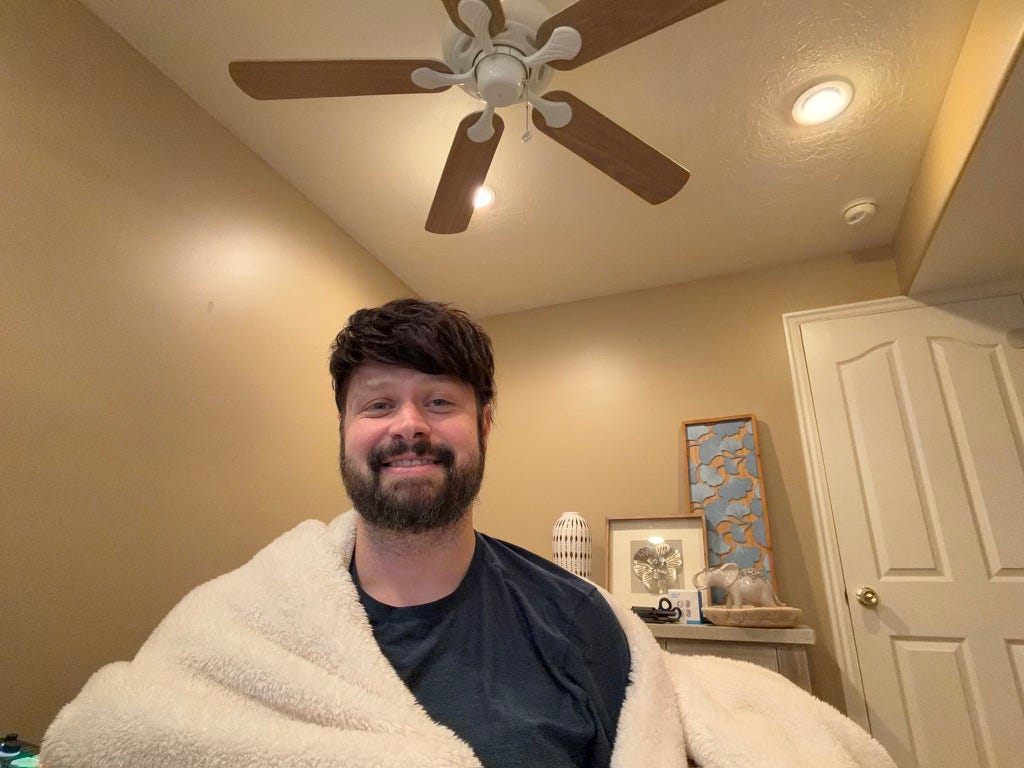
I’m Alex Lovell, PhD — political psychologist, yoga therapist, and the founder of a made-up institution called The Department of Aliveness.
By day I’m a VP leading global research on what makes people come alive at work. I love it. By every other random hour I’m here — writing, facilitating, and walking beside people who are figuring out what it means to be alive after everything shifted.
I’ve been homeless. I’ve been divorced. I’ve had my brain rewired by a semi-truck and my life rearranged by things I didn’t choose. I’ve also been surprised by how much aliveness was waiting in the wreckage — not because suffering is a gift, but because I stopped waiting to be healed before I started paying attention.
I’m on a mission to remind one person a day that the life they’re living is the one that counts.
Alex, wow. I want to begin by thanking you for telling us what's been going on behind the scenes in your life. I think of you so often. I remember last year when you'd mention from time to time about the accident, your TBI, and a possible lawsuit. Here, today, I read about what you went through when "put on trial." Often, I feel enraged at the language lawyers use to win their cases. It's almost always at the expense of a human who has been deeply hurt.
And to see that the case is finally, blessedly, over and that it has been settled with the insurance company - I felt an exhale of relief. I hope you get to feel relief, too. I hope your body and brain get a chance to truly rest for however long you need.
Glad you are my friend.
You will not believe me but I have to tell you reading your words today no matter the subject matter was music to my ears and beauty to my soul. I have missed feeling connected through your writing. You always make me feel hopeful even when what you wrote also made me sad at the same time. The sadness though was never mine it was sadness for you and all the struggles you fight your way through, That part always gave me hope Your progress no matter how small made it a chance for my own disabilities to become more acceptable to myself. You give me hope that the world isn’t as bleak as it seems and really seeing it through your eyes and thoughts gives me a valuable asset—-optimism. I will always pray that what you seek and need will be granted to you. You deserve to be happy and to find lasting peace within so you can soar just by being exactly who you are. Recognizing that the path you were placed on was not in your control but that path is now totally under your control. It doesn’t matter that how you were before might be gone because what is present is a Godsend or Universe gift to those you touch base with on your current path. I sincerely hope you continue to enlighten me with your Aliveness. No matter how frequent or not, but as long as you wish and are able to share your journey I am grateful. So very glad I read you today! Welcome back my friend.